
The Language of Silver: The Sacred History of Amazigh Jewelry
The Materials: Why Silver Reigned Supreme
The Lunar Connection: In Amazigh cosmology, silver is tied to the moon. It symbolizes purity, honesty, and cool, protective energy, whereas gold was often viewed with caution or superstition.
The Living Currency: Jewelry functioned as a woman’s personal insurance policy. Given to her at her wedding, it remained her absolute property. In times of severe drought or financial hardship, pieces could be traded or melted down to safeguard the family.
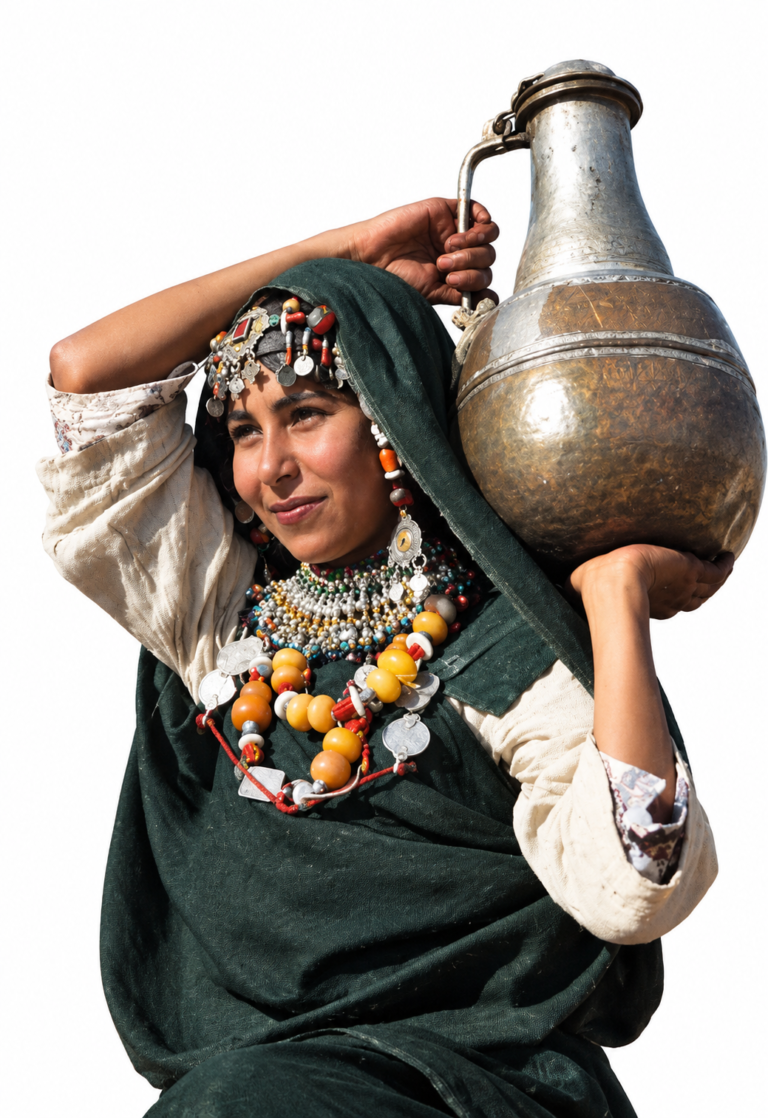
Organic Elements: Silver was almost always paired with semi-precious stones, each chosen for specific properties:
Iconic Masterpieces and Their Symbolism
| Jewelry Piece | Indigenous Name (Tamazight) | Artistic Design | Symbolic & Cultural Meaning |
|---|---|---|---|
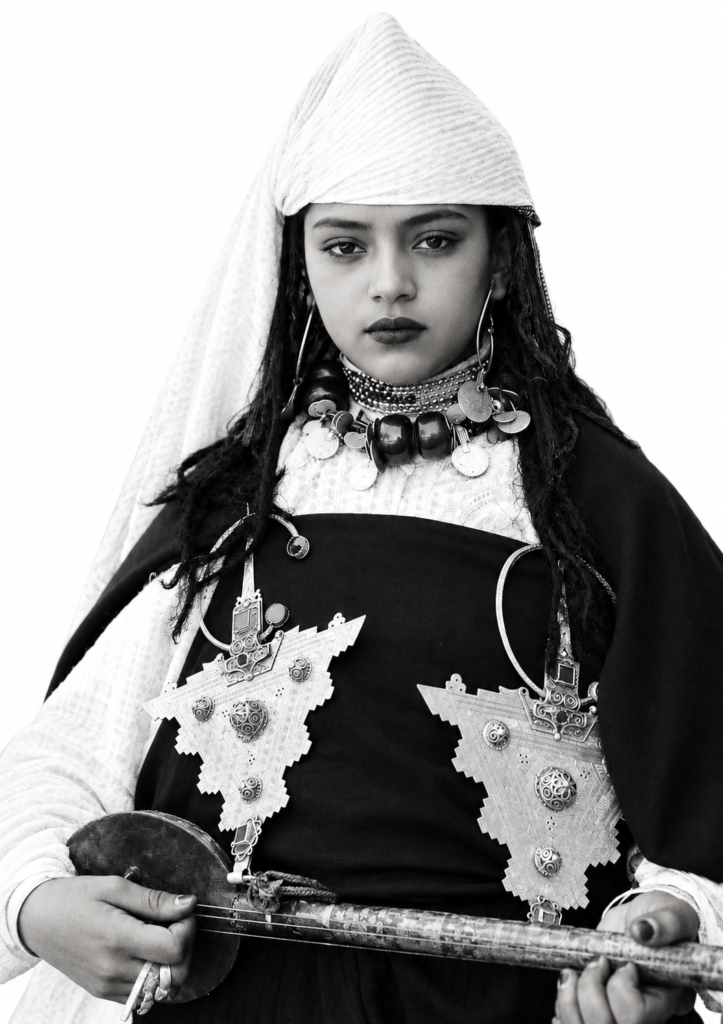
| The Fibula Pin | Tazerzit / Tisghnas | A large, triangular silver pin attached to a circular ring, often heavily engraved or enameled. | Represents the feminine form, fertility, and the ultimate visual symbol of Amazigh identity. |
| The Hand Pendent | Khamsa / Hamsa | A stylized, geometric rendering of a five-fingered hand. | Acts as a powerful talismanic shield to deflect bad luck and ward off envy. |
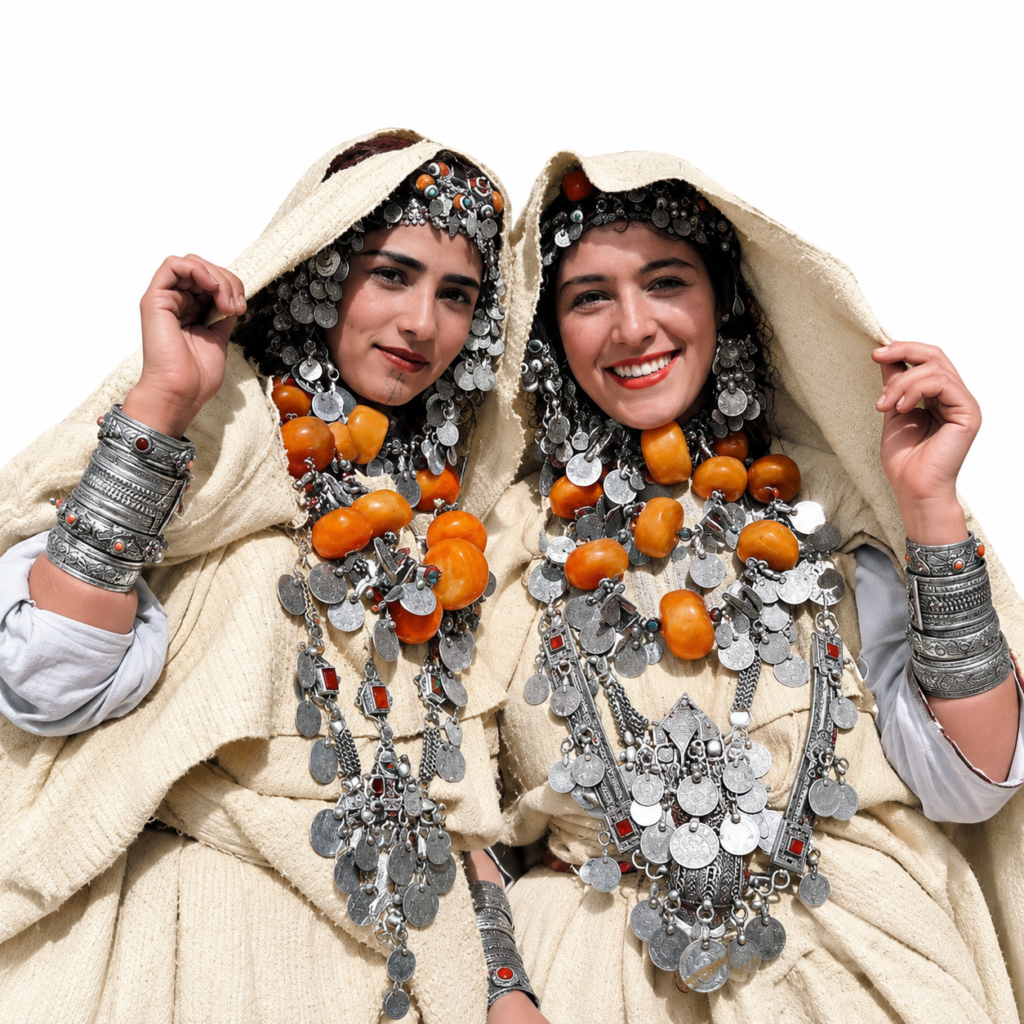
| The Diadem Crown | Asserssl | An elaborate headdress layered with dangling coins, silver beads, and vibrant gems. | Worn during weddings to signify a bride’s transition into community leadership. |
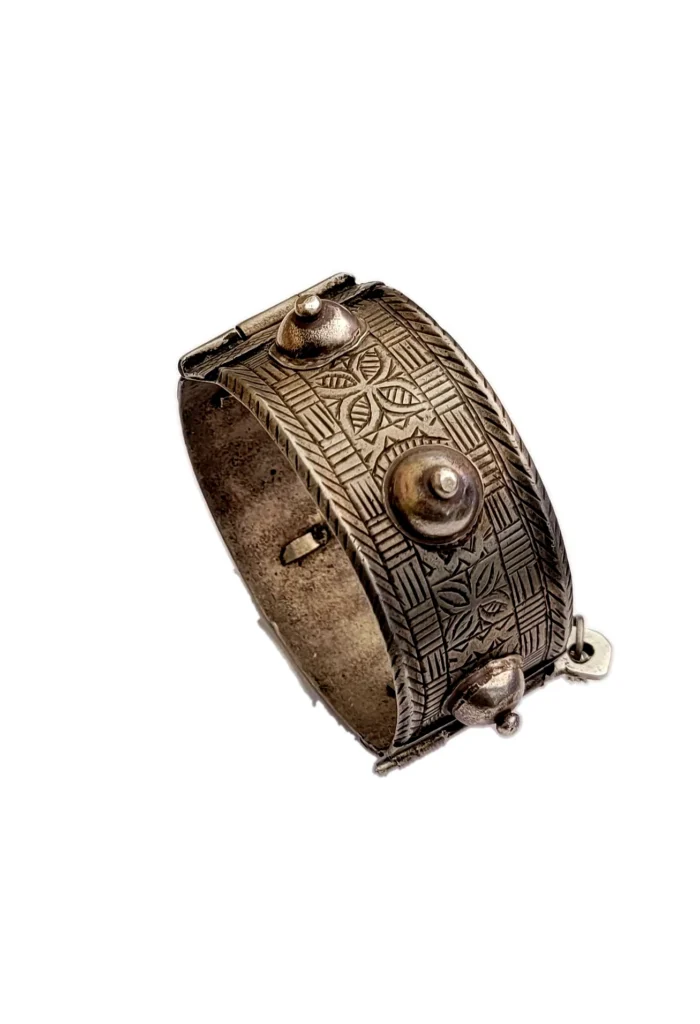
| The Heavy Anklets | Ikhelkhalen | Massive, rigid silver cuffs often carved with sharp, defensive geometric spikes. | Symbolized structural status and wealth while offering physical protection. |
The Techniques: A Cross-Cultural Artistic Fusion
Cloisonné Enameling: Mastered beautifully in the Kabylia region of Algeria, artisans filled chiseled silver cells with powdered glass, firing them into vibrant bursts of sunny yellows, deep blues, and leafy greens.
Filigree: The delicate art of twisting and braiding microscopically thin silver wires into complex, lace-like geometric patterns.
Niello: A dark, metallic alloy fused into engraved grooves to create a striking, high-contrast black backdrop against polished silver surfaces.
Keeping the Thread Alive
Today, these ancient statement pieces transcend time. Their bold, oversized geometry continues to inspire modern fashion houses and global runways alike. But for me, it goes much deeper than fashion. Each piece is a physical reminder of a resilient heritage that refused to be erased.