

A Taste of the Land
Food is never only food. It carries the memory of a place, the rhythm of its seasons, and the hands that prepared it.
Across the mountains, valleys, plains, and villages of North Africa, food has long been inseparable from the landscape that produces it. For Amazigh communities, cuisine developed not from a single culinary blueprint, but from an intimate relationship with the environments in which people lived, cultivated, harvested, preserved, and gathered. The mountains of the Atlas, the valleys of the Souss, the dry landscapes of the Anti-Atlas, the oases of the southeast, and the many other territories inhabited by Amazigh communities each offered their own possibilities and limitations. What grew, what could be stored, what could be exchanged, and what had to be preserved for another season all shaped what eventually appeared on the table. There is, therefore, no single Amazigh cuisine in the strictest sense. There are many local traditions, shaped by geography and passed through generations, yet connected by a common intimacy with the land and by an understanding of food as something far greater than nourishment.
The ingredients themselves tell part of this story. Barley and wheat have sustained generations, transformed into flour, bread, couscous, porridge, and other preparations. Olives have been harvested and pressed into oil; almonds have been gathered and roasted; argan fruit has been transformed into one of the region’s most distinctive oils; dates, figs, legumes, herbs, vegetables, and seasonal fruits have each found their place according to region and availability. These ingredients may appear humble when separated from their surroundings, but within the culture that produced them they represent something much larger: an understanding of how to live with the seasons, how to make use of what the land provides, and how to preserve abundance for the months when the fields offer less. Traditional food was never simply about what tasted good. It was also about what could be grown, what could survive, what could be stored, and what could sustain a household.
Before a meal reached the table, there was usually a much longer story behind it. Grain had to be cultivated and harvested; olives had to be gathered; almonds collected; vegetables grown; herbs dried; ingredients ground, preserved, or stored. The distance between the field and the kitchen may have been short, but the knowledge required to move from one to the other was immense. Cooking was part of an entire cycle of agricultural life, and the kitchen was not merely a place where ingredients were combined. It was where the results of the harvest were transformed into something capable of feeding a family, welcoming a guest, marking a celebration, or carrying a memory from one generation to the next.
This is perhaps where Amazigh cuisine becomes most fascinating: much of its knowledge was never written down. It lived in observation. A child could stand beside a mother or grandmother and learn not through measurements and instructions, but through watching the movement of her hands. How much water should be added to the dough? How should grain be rubbed between the fingers? When is the couscous ready for another steaming? How much oil is enough? When has bread reached the right texture? These were not necessarily questions answered by written recipes. They were learned through repetition, through the senses, through years of watching someone who had learned from someone before her. The knowledge was physical as much as intellectual. It lived in the hands.
And those hands became an archive.
A recipe could change from one household to another without losing its identity. A grandmother might prepare a dish differently from her daughter; a village might have its own variation of a preparation familiar elsewhere; a particular ingredient might appear in one region because the landscape allowed it to grow while remaining absent from another. Such variations should not be understood as imperfections or departures from an original recipe. They are part of what makes traditional cuisine alive. Food changes because people change, landscapes change, ingredients move, and generations reinterpret what they inherit. What remains is not always an exact recipe, but a relationship with food—a way of understanding ingredients, seasons, hospitality, and the table.
The land, in this sense, becomes the first ingredient.
To understand Amazigh food is to look beyond the kitchen and toward the landscape that surrounds it. The terraces cut into mountain slopes, the olive trees standing through generations, the argan forests of the southwest, the fields cultivated according to the rhythm of rainfall, the gardens and orchards hidden within villages, and the oases built around precious sources of water all form part of the culinary story. The landscape determines what is possible, while human knowledge determines what can be made from it. Between the two exists a quiet conversation that has continued for centuries: the earth provides, people adapt, and the kitchen transforms.
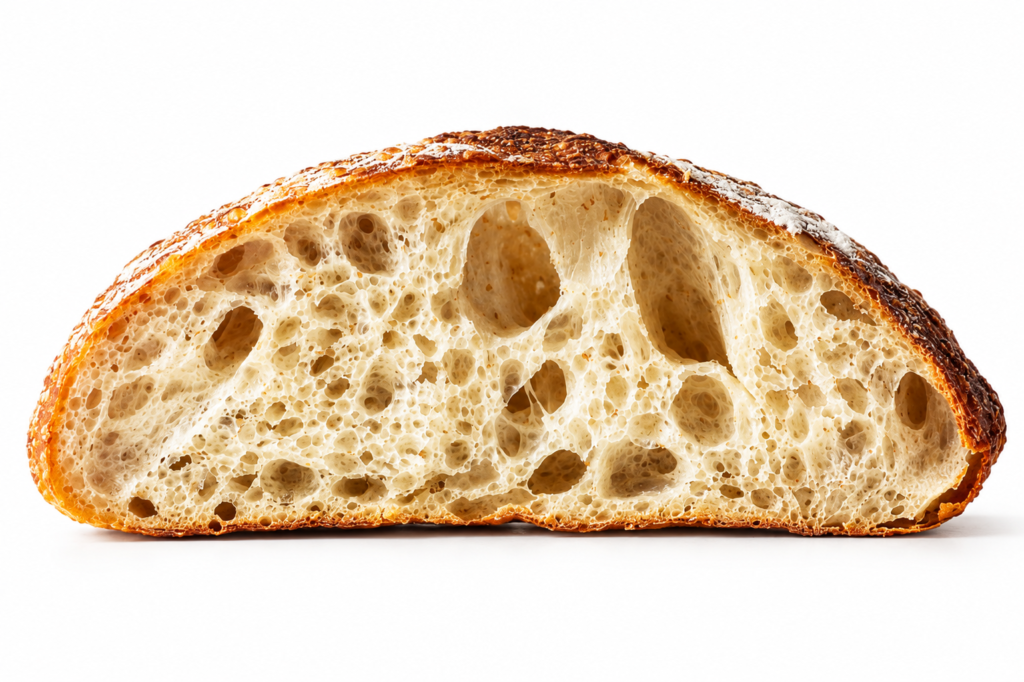
Among the most enduring expressions of this relationship are grains. Barley and wheat have historically occupied an important place in many North African food traditions, valued not only for their nutritional importance but also for their ability to be stored and transformed throughout the year. A successful harvest could become a reserve against less abundant seasons, and grain could move through several stages before reaching the table: harvested, cleaned, ground, kneaded, cooked, and finally shared. In this process, an agricultural product becomes a cultural object. Bread is no longer simply flour and water. Couscous is no longer simply grain. Each carries traces of the work, knowledge, and landscape from which it emerged.
Couscous, perhaps the most internationally recognizable of these preparations, illustrates this beautifully. Its fame has made it easy to imagine it as a single dish with a single definition, yet across North Africa its preparation is remarkably diverse. Different communities and households have their own methods, ingredients, textures, accompaniments, and occasions for serving it. Within Amazigh communities, as elsewhere, couscous belongs not only to the world of food but to the world of gathering. Its preparation can require time and patience, and the act of making it may itself become communal. Grain is worked by hand, shaped into small grains, steamed, returned to the hands, and steamed again. The process is repetitive, almost meditative, and deeply tactile. It is the kind of knowledge that can be difficult to describe completely in a recipe because the hands understand things that measurements cannot always express.
And perhaps that is why traditional food has such a powerful relationship with memory. A person may forget the precise ingredients of a dish but remember the sound of grain being prepared, the smell of bread coming from the oven, the texture of dough beneath the fingers, or the sight of a grandmother sitting at the center of a kitchen. Food stores experiences in unusual ways. A particular taste can return someone to a childhood home; a familiar aroma can evoke a landscape that has not been visited for years; a traditional dish can suddenly make a distant place feel close again.
In Amazigh households, this transmission of food knowledge has often been closely associated with women, whose daily work in preparing, preserving, and serving food also made them important custodians of culinary memory. Their knowledge extended beyond recipes. It included knowing when to harvest, how to store grain, how to preserve seasonal produce, how to prepare bread, how to use available ingredients economically, and how to adapt a meal to the people gathered around the table. Much of this work was ordinary precisely because it was part of everyday life, yet its cultural importance becomes clearer with distance. What appeared to be simply the preparation of dinner was also an act of transmission. A daughter watching her mother was learning more than how to cook. She was learning how her family understood food, hospitality, seasons, and home.
The same philosophy can be found in the culture of sharing. Food in Amazigh communities has traditionally existed within a larger social world in which hospitality carries considerable meaning. Bread can be offered to a guest; tea can mark a welcome; couscous can bring an extended family together; a simple meal can become an occasion simply because it is shared. The value of a dish is therefore not determined only by its ingredients. Sometimes its greatest ingredient is the person sitting across the table.
This is why Amazigh cuisine should not be reduced to a catalogue of dishes. To list couscous, bread, amlou, olives, tagine, barley preparations, or other foods is to name only the visible surface of a much deeper tradition. Beneath every preparation lies a landscape, a season, an agricultural practice, a method of preservation, a household, and a chain of memory connecting one generation to another. The food is what we can taste; the culture is everything that brought it to the table.
A recipe can disappear from paper. It is much harder to erase a recipe from memory.
And perhaps this is the enduring beauty of Amazigh cuisine: it does not exist only in the past. It continues wherever someone prepares bread according to the knowledge of a grandmother, gathers olives from an old tree, serves couscous to family, pours argan oil over a piece of bread, or teaches a child the small gestures that cannot quite be explained in words. Traditions survive not because they remain frozen, but because people continue to practice them. The ingredients may change, the kitchens may modernize, and the world around them may move quickly, yet the essential conversation between land, food, and memory continues.
Before it becomes a meal, Amazigh food begins with the landscape. Before it becomes tradition, it begins with a gesture. And before it becomes history, it is simply something placed on a table and shared.